Collection 2 models

Collection: CENTRAX® RADON MITIGATION FAN KIT

Radon can enter homes through foundations, floor cracks, sump openings, utility penetrations, and crawl spaces without any visible or noticeable warning. Suncourt Radon Mitigation Fan Kits provide the high suction force needed for sub-slab depressurization systems designed to move radon gas from beneath the home and vent it outdoors. 

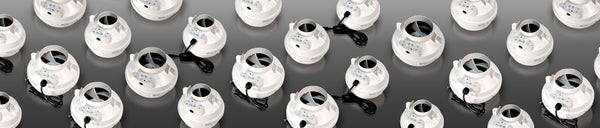
Choose from our radon fan kits built around a 4” Centrax® centrifugal fan rated for continuous operation.

  • Quiet motor with high volume and pressure for superior sub-slab soil depressurization.
  • Watertight, UV-resistant housing rated for indoor and outdoor installations.
  • Includes fan and anti-vibration couplers for radon mitigation installations
CENTRAX® RADON MITIGATION FAN KIT
Proprietary Impeller Design
MET Listed for Continuous Use
5-Year Limited Warranty
Epoxy-Sealed Housing
Automatic Thermal Reset
Buying guide

How to choose CENTRAX® RADON MITIGATION FAN KIT

Reduce Radon Before It Enters Your Living Space

Active sub-slab depressurization is the recommended mitigation method for full or partial basements, crawl spaces, and cement slabs. A suction pipe extends below the concrete slab and connects to a continuously operating fan. This creates lower pressure beneath the foundation, pulling soil gas into the vent system before it can migrate into occupied living areas.

Our RDN04 and RDN04-3 kits feature a Centrax® centrifugal fan engineered specifically for the high suction and continuous airflow demands of sub-slab depressurization. The unit includes 4” inlet and outlet ports, a sealed housing, automatic thermal overload protection, and anti-vibration couplers to minimize noise transfer across connected PVC piping.

Note: Water damage and damage from obstructions or small animals will void the warranty of internal components. Ensure proper measures are taken to prevent moisture, debris, and wildlife from entering the exhaust pipe.

Key Benefits:

  • Centrifugal impeller design builds high suction specifically for sub-slab pressure reduction.
  • Enclosed motor rated for continuous use with automatic thermal reset protection.
  • Anti-vibration PVC couplers dampen operational noise across connected piping runs.
  • Delivers 235 CFM airflow with efficient power usage of 91 Watts and 0.76 Amps.

Technical Specifications

Specification RDN04 / RDN04-3
Fan Type Centrax® centrifugal fan
Fan Connection 4 in inlet / 4 in outlet
Airflow 235 CFM
Voltage 120 V
Current 0.76 A
Power 91 W
Frequency 60 Hz
Operation Continuous
Installation Indoor or outdoor
Safety Rating MET Listed
Motor Enclosed
Motor Protection Automatic thermal reset
Impeller High-suction centrifugal design
Category FAQ
01 What is radon?
Radon is a naturally occurring radioactive gas formed as uranium in soil and rock breaks down. It has no color, smell, or taste. A radon test is needed to determine how much is present in indoor air. Long-term radon exposure increases the risk of lung cancer.
02 What radon level requires action?
EPA recommends fixing a home when testing confirms a radon level of 4 pCi/L or higher. EPA also recommends considering radon reduction when levels are between 2 and 4 pCi/L because there is no known safe level of radon exposure.

A picocurie per liter, or pCi/L, measures the rate of radioactive decay within a liter of air.
03 How does radon enter a home?
Radon commonly moves from the soil below a building through openings in the foundation. Entry paths can include:

Cracks in concrete floors and foundation walls
Openings around sump pumps and drains
Gaps around pipes, wiring, and other utility penetrations
Construction joints
Wall cavities
Crawl spaces
Openings between slabs and foundation components

Any home can have elevated radon levels, so nearby test results should not be used to predict the level in your own home.
04 What is a sub-slab depressurization system?
Sub-slab depressurization uses a suction point below a concrete slab, PVC piping, and a continuously operating fan. The fan draws soil gas from beneath the foundation and sends it through a vent pipe to the exterior.

The goal is to keep pressure beneath the slab lower than the pressure indoors, reducing the path for radon to move into the living space.
05 Does every home need the same radon system layout?
No. Foundation type, sub-slab material, radon concentration, pipe routing, and airflow below the slab all affect system design.

Some homes can be served by one suction point. Others, including homes with poor sub-slab communication or multiple foundation sections, may require additional suction points or branch runs. EPA technical guidance notes that low-permeability sub-slab material can require additional suction pipes and careful placement.

A qualified radon professional can determine suction-point placement and whether a single fan is suitable for the planned piping layout.

Not sure which model the boot takes?

Send the register dimensions and a photo. We'll name the model, the
airflow you can expect, and the nearest distributor holding stock.